



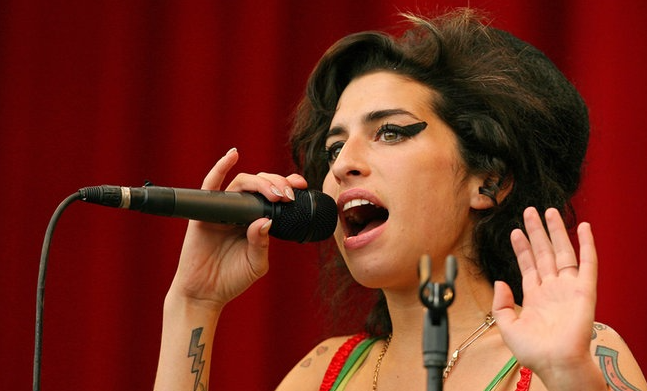
Amy Winehouse's beehive was so iconic that people still ask whether it was real hair, extensions, padding, or a wig. The honest answer is: her signature look was built. It was not simply her natural hair brushed upward and magically holding that shape. It involved styling, backcombing, added hair, and at times wig or hairpiece techniques depending on the appearance and period.
Amy's hair worked like a silhouette. You could recognize her from the outline alone: high beehive, heavy eyeliner, retro dress, tattoos, ballet flats. That look connected her to 1960s girl-group glamour, especially the Ronettes, while still feeling completely her own.
Her hairstylist Tracey Cahoon has spoken about creating the beehive and how the style grew from playful experimentation into Amy's visual signature. Reports about the look often mention backcombing and extra hair being added to build the height. That is normal for a beehive. Even in the 1960s, big hair was rarely just "natural volume."
Sometimes the word "wig" gets used loosely for anything that is not purely natural hair. But in hair terms, there is a difference between a full wig, extensions, padding, falls, pieces, and teased natural hair. Amy's everyday public image appears to have relied heavily on styling and added hair rather than one simple full wig worn the same way every time.
That said, exhibits, recreations, performances, and costume references often use wigs to represent the beehive because a wig is the easiest way to reproduce the shape. When people say "Amy Winehouse wig," they often mean a costume version of her beehive, not proof that every original appearance was a full wig.
The better question is not whether Amy "needed" a wig. The beehive was part of her styling language. It made her look taller, sharper, more retro, more theatrical, and instantly identifiable. Like Dolly Parton's wigs or Cher's hairpieces, the construction does not make the image less authentic. It is part of the art.
For a costume, buy a black beehive wig and focus on proportion: height at the crown, long side pieces, winged eyeliner, and a fitted retro outfit. For a more realistic version, use a half wig, padding, teasing, and extensions instead of a stiff party wig. The shape matters more than whether every strand is real.
Bottom line: Amy Winehouse's famous beehive was a constructed style that used serious hair artistry and added volume. Calling it simply "a wig" is too flat. It was a visual signature, and that is why people still talk about it.